Posted by
Bear Safety Team
on
August 13, 2026
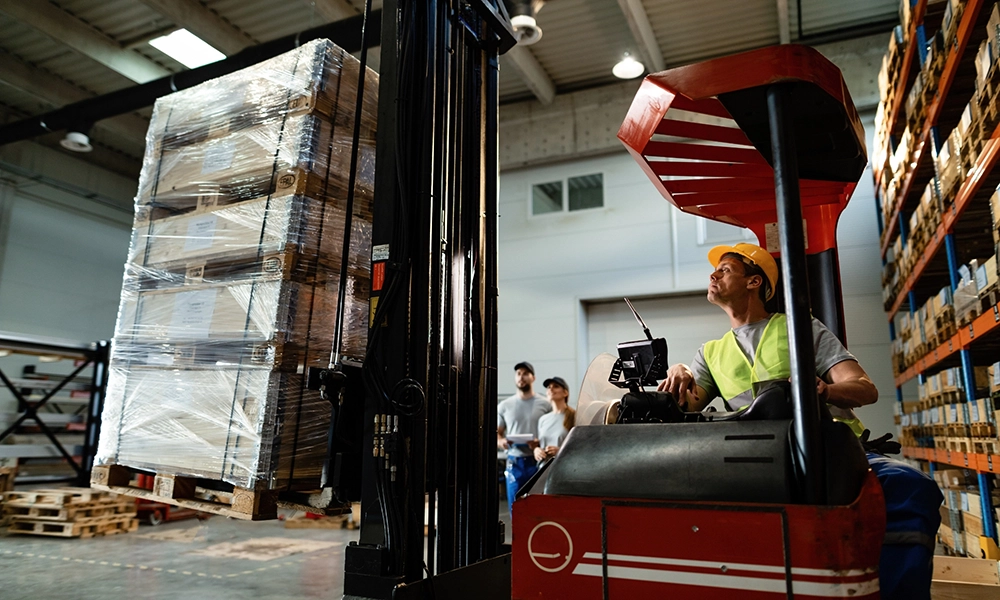
In many warehouses and manufacturing sites, the biggest safety risks are not always in the most obvious places. They often appear at blind corners, aisle ends, doorways, crossings and shared routes where forklifts and pedestrians move through the same space.
These areas can become part of the daily routine. Drivers know the route. Pedestrians know where they usually walk. But when visibility is limited, traffic increases or someone is unfamiliar with the site, a familiar route can quickly become a higher-risk area.
That is why warehouse blind spot safety should be reviewed as part of any workplace transport safety plan.
Blind spots occur when a driver, pedestrian or site visitor cannot clearly see what is approaching. In industrial environments, this can happen for many reasons.
The issue is not always a lack of safety rules. Many sites already have signs, painted walkways and procedures in place. The problem is that static safety messages can become less effective when people see them every day or when the environment changes around them.
A sign only works if people notice it at the right time and understand what action to take.
The first step is to review whether pedestrians and vehicles can be separated. This may include dedicated walkways, physical barriers, separate doorways, marked crossing points or one-way vehicle routes.
Where full separation is possible, it should usually be the preferred option. A clear pedestrian route can reduce confusion and make it easier for drivers to anticipate where people may be.
However, many warehouses and production areas have space constraints. Pedestrians may need to cross vehicle routes to access workstations, welfare areas, goods-in zones or packing areas. When separation is not fully practical, visibility and communication become even more important.
A good safety control should support people at the moment they need to make a decision.
At a blind corner, that decision may be:
If the answer is not obvious, the area may need better visual communication.
Painted floor markings and wall signs can help, but they may not always be enough. In busy sites, they can fade, become dirty, get blocked by stock or blend into the background.
The safety message should appear where the risk is, not several metres away from it.
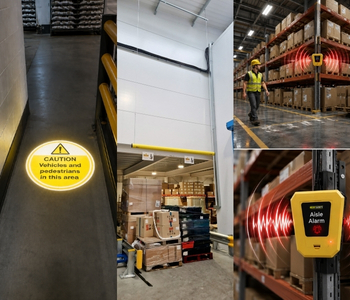
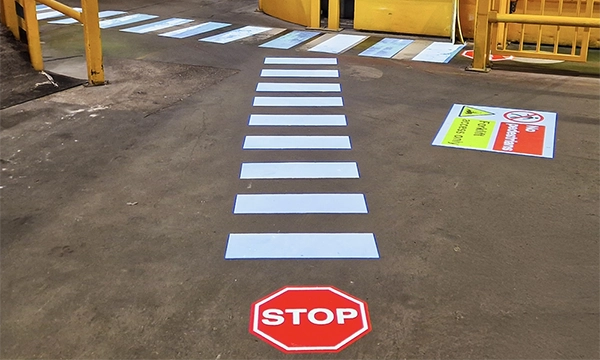
Projected safety lighting uses industrial projectors to display clear signs, symbols, walkways or warning messages onto the floor or wall. These can be used to highlight pedestrian routes, crossings, stop points, exclusion zones or hazard warnings.
For blind spots, projected safety lighting can help make the risk area more visible and easier to understand.
Unlike painted floor markings, projected signs do not wear away when forklifts drive over them. They can also be useful on dusty, rough, uneven or discoloured floors where paint or tape may be harder to maintain.
Not every warning needs to be visible all the time.
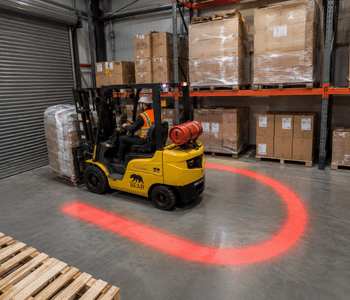
In some areas, a warning is only needed when a forklift is approaching, a vehicle enters an aisle, a door opens or a pedestrian enters a shared route. This is where automated visual warnings can add value.
Dynamic warnings can help draw attention because they appear when the risk is active.
For example, a static sign that says “Caution: Forklift Trucks” may be seen every day and eventually become less noticeable. A projected warning that appears when movement is detected can feel more immediate and relevant.
This can support safer behaviour without relying only on memory, habit or manual intervention.
The right solution depends on the layout, traffic flow and risk level of the area. Bear Safety solutions that may support blind spot safety include:
The aim is not to add technology for the sake of it. The aim is to make the hazard easier to see, understand and act on.
If you are reviewing blind spots across your warehouse or manufacturing site, start with a simple walkthrough.
This type of review helps identify whether the site needs better layout control, clearer markings, dynamic warnings or a more complete site-specific safety solution.
Warehouse blind spots should not be treated as isolated problem areas. They are part of the wider workplace transport system. A crossing, doorway or aisle end may look small on a floor plan, but it can become a critical interaction point between people and vehicles.
By improving visibility and making warnings more relevant, sites can support safer decisions without adding unnecessary complexity.
Need help reviewing blind spots on your site?
Bear Safety provides projected safety lighting, automated warning systems and site-specific industrial safety solutions for warehouses, manufacturing sites and logistics facilities.
Request a Bear Safety site review and we’ll help identify where projected signs, walkway systems, door alerts or automated warnings could support your operation.
Proactive Safety Solutions for reducing risk in industrial environments.

Proactive Safety Solutions for reducing risk in industrial environments